


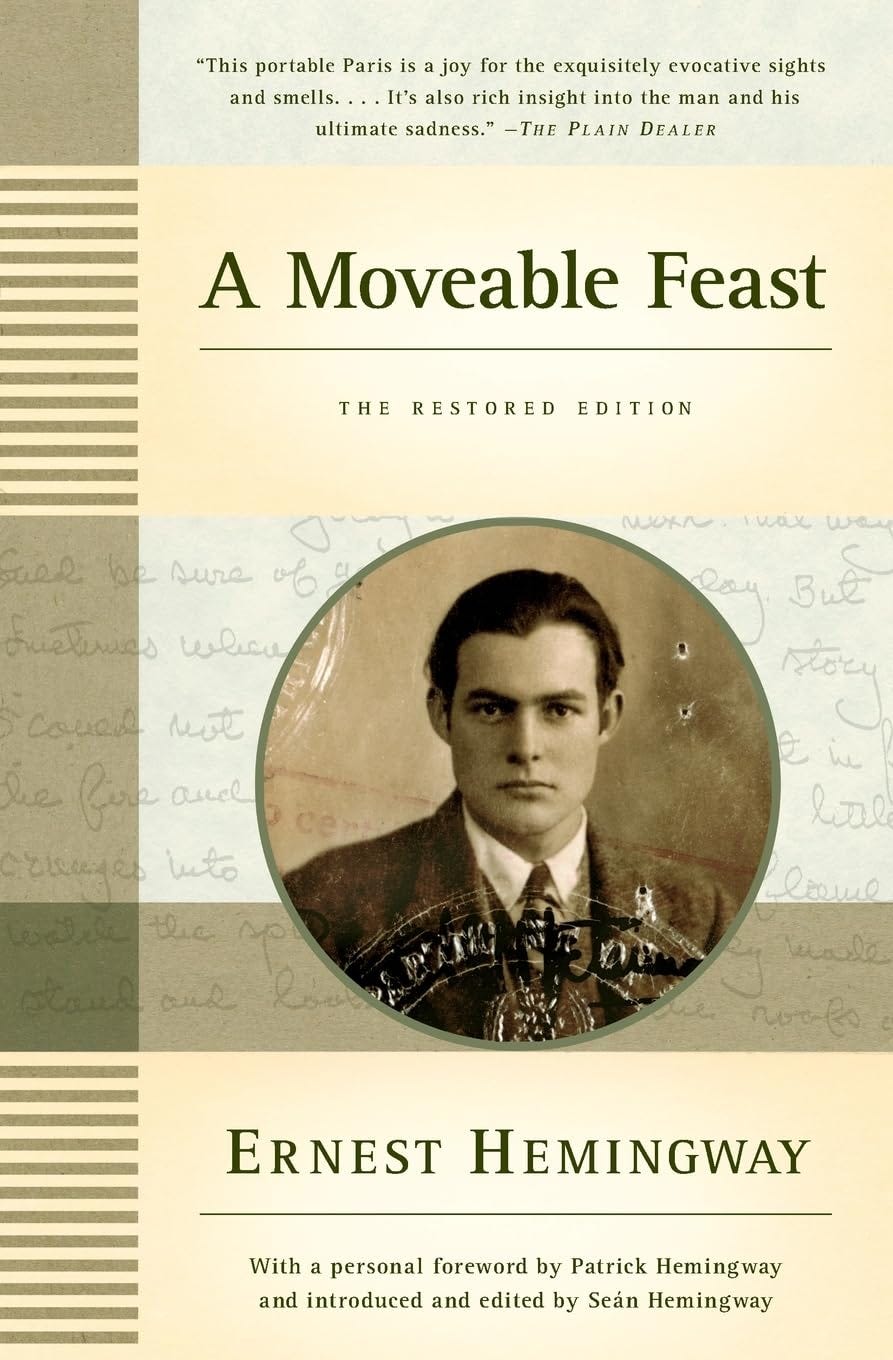
Ernest Hemingway, A Moveable Feast: The Restored Edition, ed. Seán Hemingway. New York: Scribner’s, 2009. 256 pp.
Over the years, Hemingway’s works such as The Green Hills of Africa and Death in the Afternoon have been tentatively referred to as non-fiction. Drawing the line between what happened versus how Hemingway retold the story has never been easy. Truth, it seemed, was sacrificed to the needs of Hemingway’s art. A Moveable Feast is no exception to Hemingway’s penchant for reconstructing history to his own ends.
But the 2009 publication of the Hemingway’s posthumous work in a Restored Edition, edited by Ernest’s grandson Seán, evokes a different kind of argument. The differences found between Mary Hemingway’s original edit of the memoir and Seán Hemingway’s “un-edit” of it represents a problem created by Ernest through his writing style. It becomes hard to determine which edition is truer, particularly when the author is not known for living up to his name. And it isn’t the only text to face such hurdles. When it came out in 2005, Under Kilimanjaro presented similar problems when compared to 1999’s True at First Light, with many of the questions of editorial efforts and “restorations” manifesting.
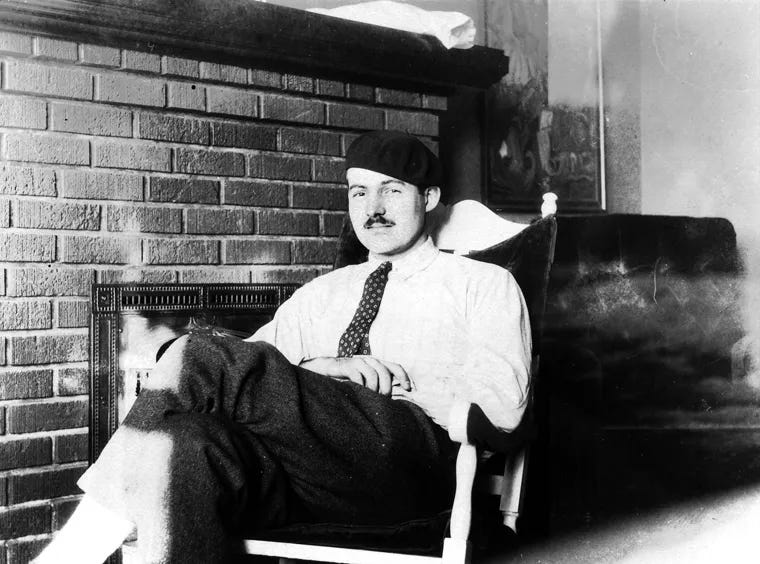
Yet just as Hemingway sought to write a “true book” with Green Hills of Africa, Papa Hemingway was after something substantial with his final “Paris Sketches.”1 Hemingway’s ultimate goal, I believe, was to turn the downtrodden into heroes; to atone for his past sins against people who had loved him very much. Of these people, Ezra Pound, F. Scott Fitzgerald, and Hadley Hemingway play the most important roles (although Hemingway attempts briefly to redeem Gertrude Stein as well).
In a letter to Fitzgerald in 1934, Hemingway told his friend that when an author is at his best, what he writes would eventually become truth. In A Moveable Feast, Hemingway attempted to make this a reality. As his final shot at persuading public opinion on people he cared for a great deal, Hemingway devoted the last years of his life trying to put his Paris memoir together. His constant praise of Ezra Pound and his tragic depictions of Fitzgerald show a sympathetic side to Hemingway that was not stereotypical of his non-fiction writing. Perhaps most surprising was Hemingway’s treatment of Hadley, whom he claimed in his letters was the true heroine of the book. In the intimate moments where Hemingway invited his readers into his truly happy marriage, there is always the notion of something self-destructive in the same breath.
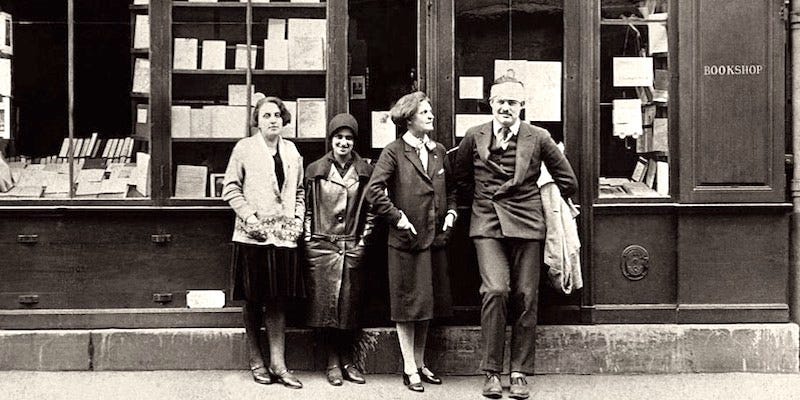
Seán Hemingway’s edition of the book seeks to bring this side of Ernest to light and demonstrate a nobler vision of who the great author truly was. Charles Scribner III would argue that Mary Hemingway’s edition rings truer because, as “Sussmayer’s completion of his master’s [Mozart] masterpiece has the ring of truth – and beauty, perhaps the same? – for he worked with Mozart up to his death, and knew how Mozart wanted the piece finished,” Mary also knew her husband’s ultimate goal.2
The argument could be supported either way, but there is no doubt that the Restored Edition is significantly different from the original. Perhaps best capturing the issue at hand, Hemingway’s oldest son Patrick concluded his foreword to the new edition with what he considered his father’s “real epigraph” to the book:
This book contains memories from the remises of my memory and my heart. Even if the one has been tampered with, and the other does not exist.
Such is the dichotomy of A Moveable Feast. It may never be truly clear if Mary Hemingway’s edition “tampered with” the memories that Ernest was trying to preserve, but it can be said that if Papa Hemingway had any heart left, Seán Hemingway has paid it a great tribute.
Hemingway’s original title for A Moveable Feast
Steve Paul, “‘New Coke versus Old Coke’: The Debate Over A Moveable Feast: The Restored Edition,” The Hemingway Review 29, no. 1 (Fall 2009): 21.