

Old Themes, New Ideas (or Not So New)
Commonplaces Vol. 07 - December 2025

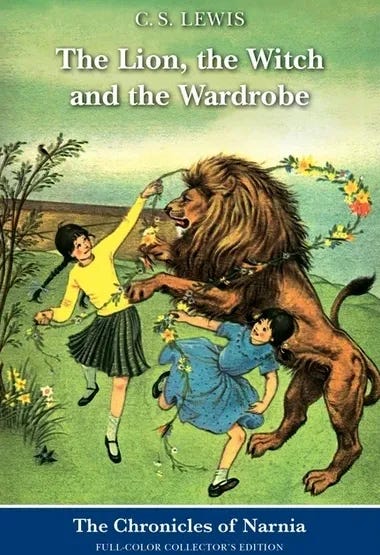
A Beaver’s Foresight
“When you meet anything that’s going to be human and isn’t yet, or used to be human once and isn’t now, or ought to be human and isn’t, you keep your eyes on it and feel for your hatchet.”
C. S. Lewis, The Lion, the Witch, and the Wardrobe. San Francisco: HarperCollins, 2000. p. 92.
Great Ideas: Man, Memory & Imagination, Good & Evil, Experience, Labor
I was reminded of this great line by Joel J Miller and I’ve been thinking about it a lot. I wish I had recalled this when I was working on my classical education and A.I. presentation earlier this fall. Naturally, I’m not surprised that Lewis would write something so prescient on a topic he could not have imagined in the same way; that’s what comes of being a well-read individual.
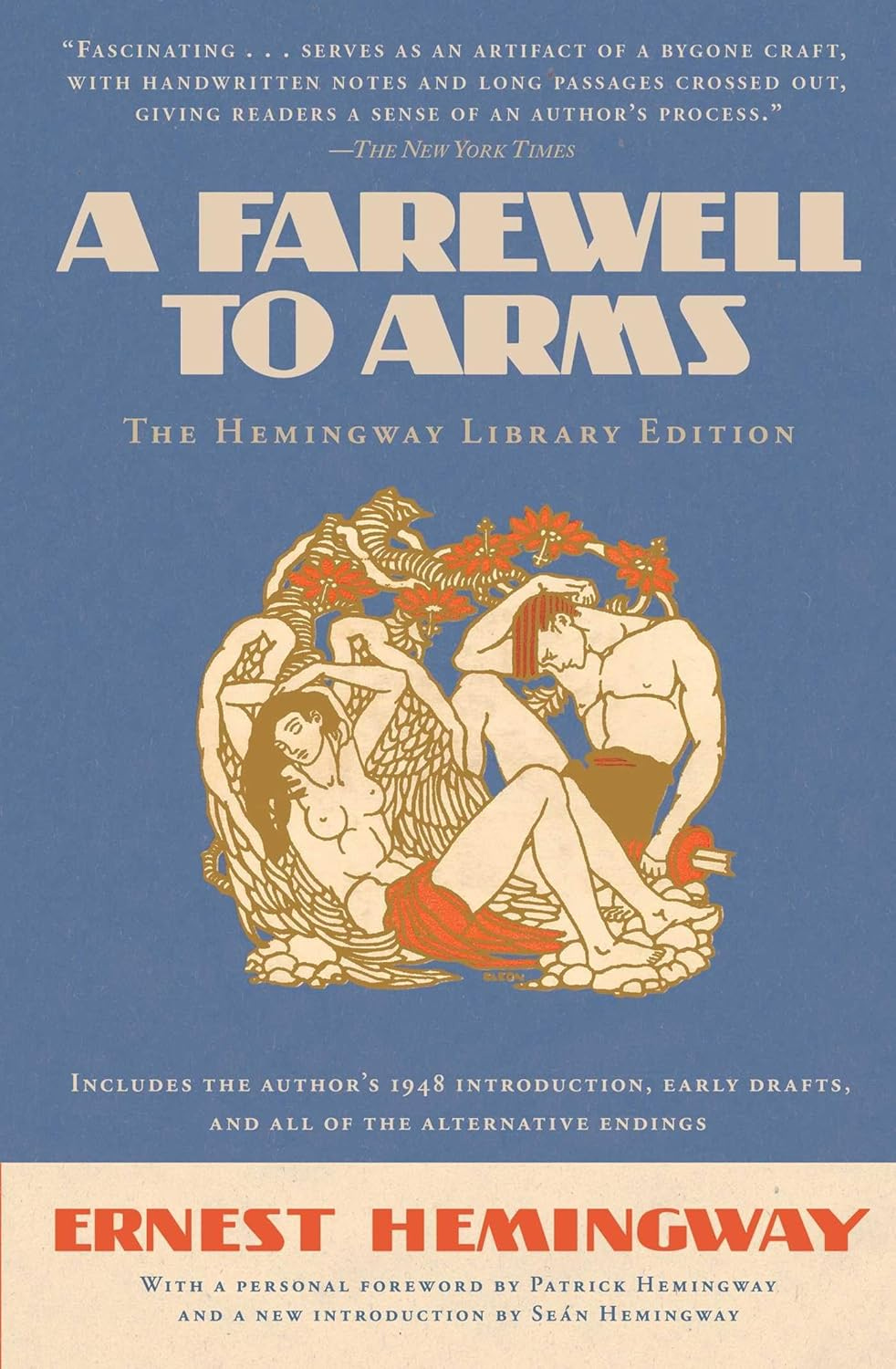
In Defeat We Become Christians
“I only think the Austrians will not stop when they have won a victory. It is in defeat that we become Christians.”
“The Austrians are Christians—except for the Bosnians.”
“I don’t mean technically Christian. I mean like Our Lord.”
Ernest Hemingway, A Farewell to Arms: The Hemingway Library Edition, ed. Sean Hemingway. New York: Scribner, 2012. p. 178.
Great Ideas: Religion, God, War & Peace
I explored the idea of catechesis in A Farewell to Arms in an essay that I hope will one day be published. But this scene is some of the very best dialogue / dialectic in all of Hemingway’s writing. What the reader expects is for the young priest to question Frederic to draw him closer to the faith, and yet that is not what happens. My recent rereading of this one has reminded me of just how good it is. I don’t enjoy it as much as The Sun Also Rises, but it is the high point of Hemingway’s artistic process in many regards. So, when the Close Reads Podcast HQ drops their episode on this one, I’m sure you will want to give it a listen.
Do What Is Good
Teaching is inherently moral and ethical in nature because it implicitly imparts values when the teacher selects or excludes topics, when they insist on answers being accepted as correct and when they encourage students to seek the truth. The moral dimensions of teaching are often hidden or ignored, but they can never be avoided and must be made more transparent. Virtues—understood as an acquired disposition to do what is good—are really taught by example.
James Arthur, Kristján Kristjánsson, Tom Harrison, Wouter Sanderse, and Daniel Wright, Teaching Character and Virtue in Schools, eds. James Arthur and Wing On Lee, Citizenship, Character and Values Education. New York: Routledge, 2016. p. 27.
Great Ideas: Education, Good & Evil, Experience, Citizenship
These books have terrible covers, but they are full of some very good writing and clear thinking. I think the first chapter of this one ought to be required reading for everyone in classical education, including faculty but especially for administrators. The “caught vs. taught” argument is handled well in this book, which often forms the divide between classical educators. Yet regardless of which side someone is on, it is indeed true that the moral aspect of the job can never be avoided.
A Shared Delusion
In this book I have tried to avoid a mixture of the ancient and the modern. To steer clear of disparities, anachronisms, and embellishments and, through the exercise of historical understanding and critical discipline, to avoid intrusion of our modern concepts into older forms of thinking and feeling, has been my aim, my effort, and no doubt, alas, my delusion.
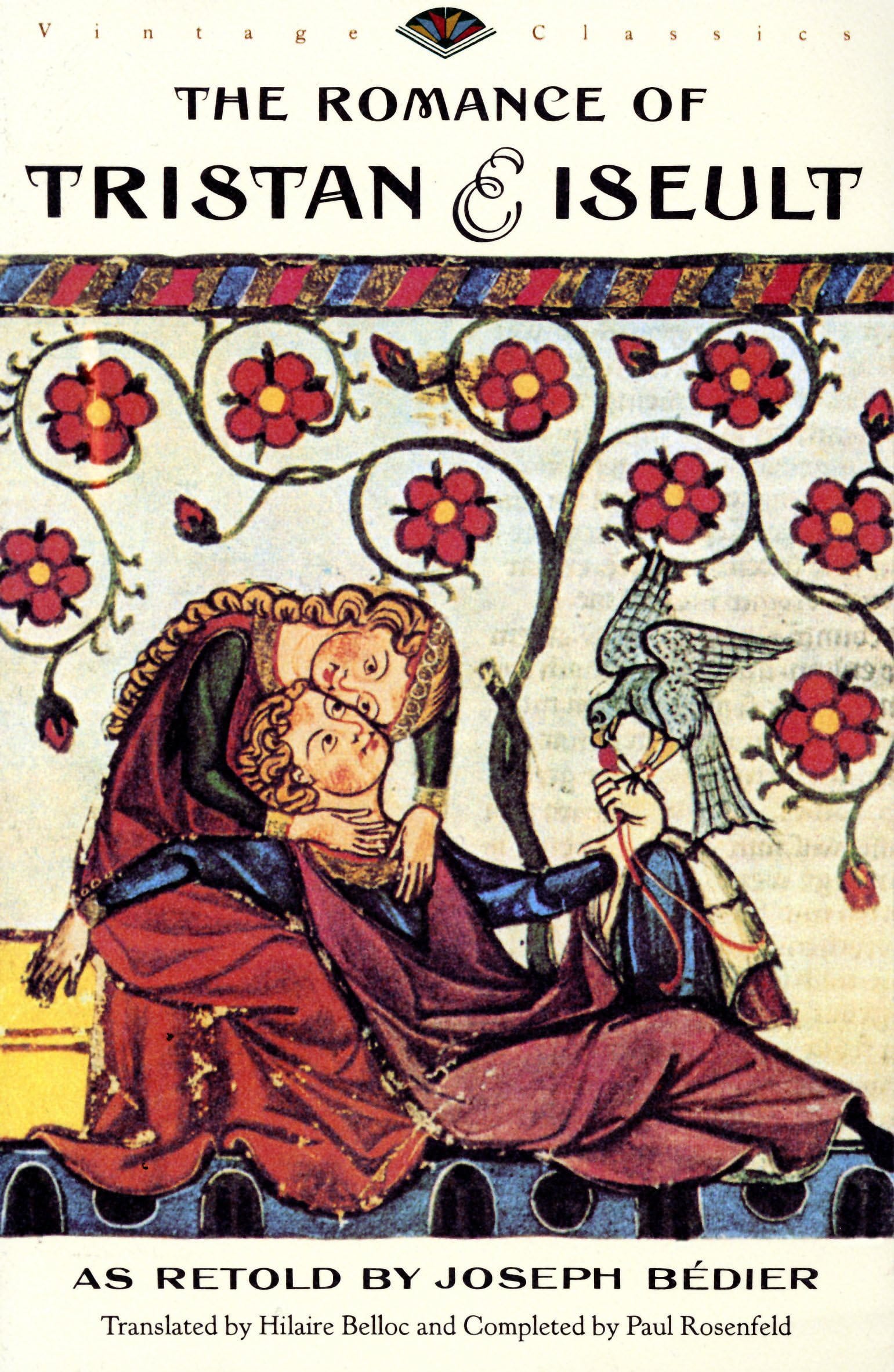
Joseph Bédier, “Preface,” Tristan & Iseult, trans. Hillaire Belloc and Paul Rosenfeld. New York: Vintage Books, 1994. p. 205.
Great Ideas: History, Poetry, World, Mind, Time
Bédier’s effort to construct a whole story out of the Tristan tradition is really marvelous, but I found this idea in his preface worth reflection. What does it mean to translate completely devoid of blending the past and the present? This seems to me something along Gadamer’s merged horizons concept, applied specifically to the act of rendering an old story for a new audience. We’re deluded if we think we can be wholly cut off from our own context. And yet . . . and yet . . . we still strive for something akin to this that we might better understand the past (which n turn helps us better understand the present). So it goes.
The Just Man’s Function
“It is not then the function of the just man, Polemarchus, to harm either friend or anyone else, but of his opposite.”
“I think you are altogether right, Socrates.”
“If, then, anyone affirms that it is just to render to each his due and he means by this, that injury and harm is what is due to his enemies from the just man and benefits to his friends, he was no truly wise man who said it. For what he meant was not true. For it has been made clear to us that in no case is it just to harm anyone.”
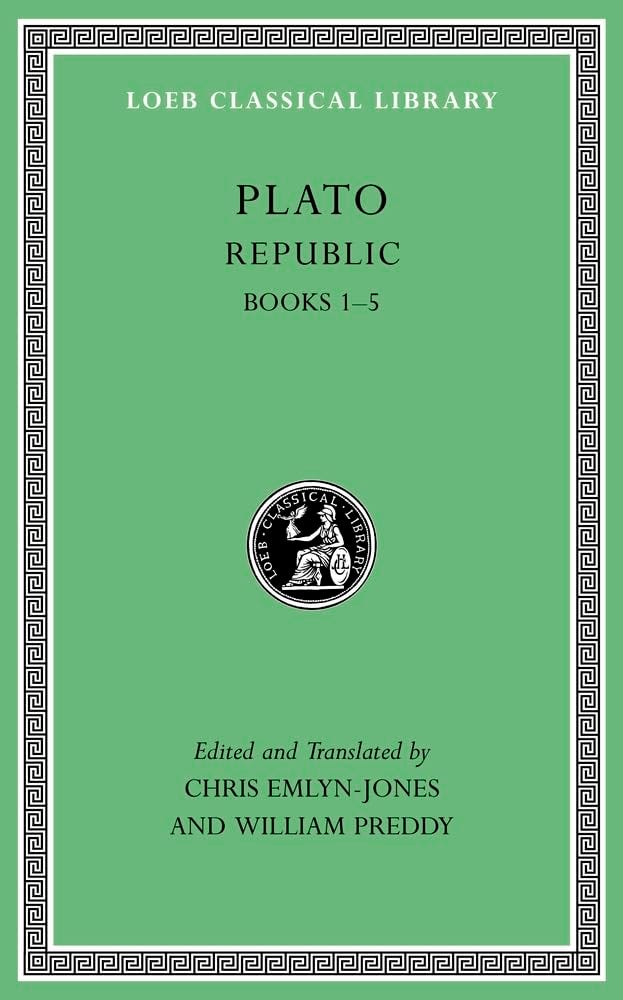
Plato, The Republic: Books 1-5, eds. T. E. Page, E. Capps, W. H. D. Rouse, L. A. Post, and E. H. Warmington, trans. Paul Shorey, vol. 1, The Loeb Classical Library, Cambridge, MA: Harvard University Press, 1942. 335d-e.
Great Ideas: Education, Relation, Pleasure & Pain, Justice
The Narnia quote above got me thinking about the concept of a neutral tool, which naturally enough brought Plato’s Republic to mind. I was going back through the early discussions of justice and this passage stood out in the Shorey translation. The phrase “function of the just man” is curious. But the juxtaposition of the mechanical “function” with the very living “just man” has my mind going. I may try to dive into the Greek side of the Loeb to see what I can make out of the whole thing.
A Bonus: Happiness & Harm
This suggests that, for all of the evident shortcomings of a purely economistic mindset, attempts to abandon tried-and-tested metrics like GDP for new-fangled indicators like happiness rankings may do more harm than good. After all, it remains extremely hard to measure happiness—and even if we could somehow come up with a reliable metric, we’d have precious little idea about what government policies could actually boost this outcome.

Great Ideas: Happiness, Wisdom, World, Man, Emotion, Wealth
I don’t often include anything that is Very Contemporary like this essay, but Mounk’s analysis of the World Happiness Report is worth reading. While I do think that Happiness can be measured, to some degree, Mounk breaks down the problems with these kinds of popular level projects that get so little pushback. His whole essay is worth your time, as are the links he provides to support his argument.