

Neutral Ground No Longer
Review: The Spy, James Fenimore Cooper

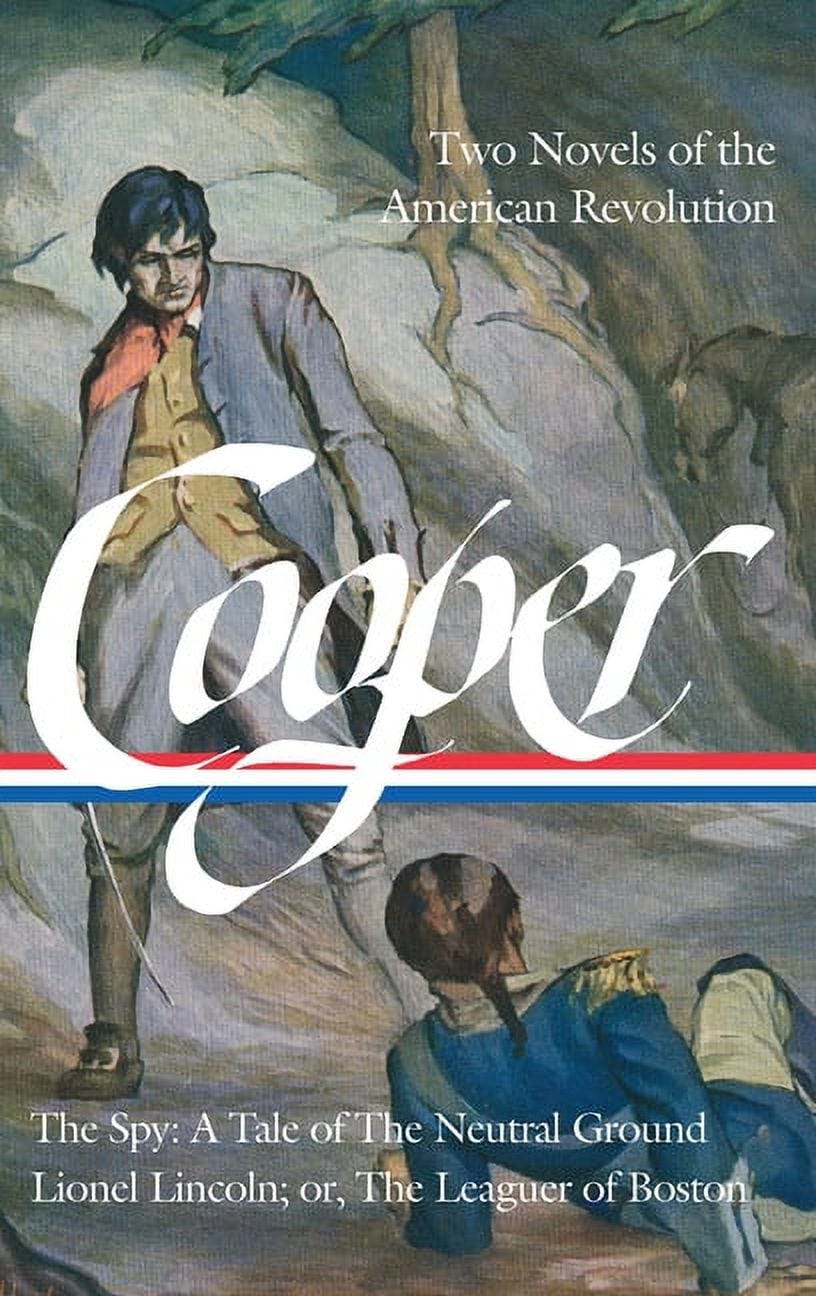
James Fenimore Cooper, The Spy: A Tale of the Neutral Ground, in Two Novels of the American Revolution, ed. Alan Taylor. Library of America no. 312. New York: Library of America, 2019. 874 pp.
I’ve not previously reviewed a work of fiction in this space, though I’ve review plenty of movies which share affinities. But given the upcoming 250th celebration, I’d like to share some thoughts on a book which was important in the early stages of my doctoral work. When I first entered the classical classroom, I was assigned James Fenimore Cooper’s The Deerslayer to teach in a class of 11th graders. The students were of wildly differing reading competencies, and I had not yet adopted a communal reading approach which meant they had to do the bulk of the work outside of class. The only way I could get them interested in the book was to read Mark Twain’s blistering critique of the novel, which probably only served to make them hate it more. I regret much of my work in those early classes. But I am also grateful for the introduction to Cooper.
Flash forward to my PhD work, and I was prompted to return to Cooper after reading Russell Kirk’s The Conservative Mind. I read a handful of his non-fiction works upon Kirk’s recommendation and found that my earlier experience with The Deerslayer was a poor one. This wasn’t Cooper’s fault, but rather the fault of my inability to read him trustingly. I might write more sometime, but reflecting on that earlier reading of Natty Bumppo’s first story changed how I approach reading more broadly and renewed in me a skepticism of ironic or uncharitable approaches to a text. The novel that really gave me a love for Cooper, though, was The Spy.
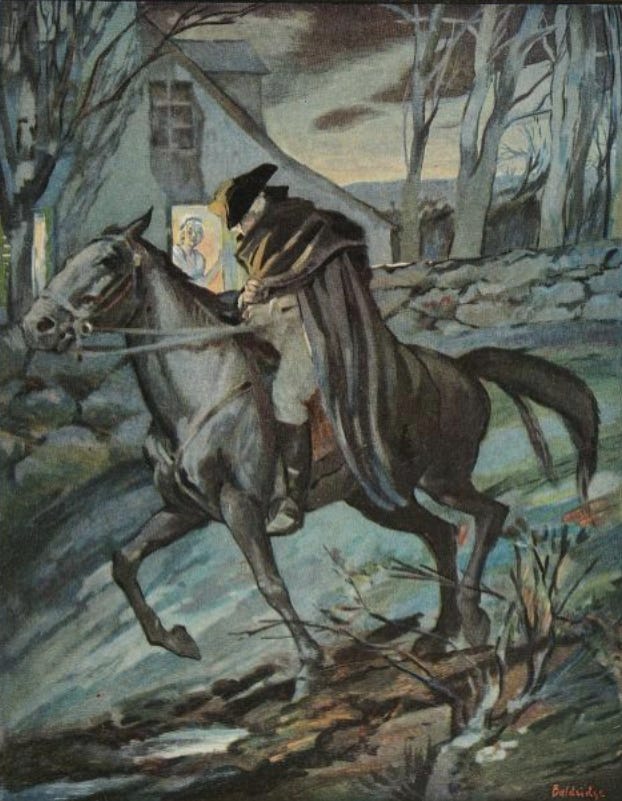
It has become somewhat commonplace in the writing of espionage literature to treat “the spy” as someone overwhelmed with skepticism, willfully ignorant of a common human dignity. Jason Bourne, James Bond, and Ethan Hunt, whether on the page or screen, manage to portray individuals of torn loyalties. Just as the State dehumanizes the spy, they likewise find themselves seeing others as disposable. But Cooper’s novel, the first American tale of government spying, presents a fully human cast of characters, who consider life and liberty things of immense value.
Cooper’s novel follows the actions of it characters primarily within a space called “The Neutral Ground,” which existed in reality during the Revolutionary War. The area was itself a place of raids and borderline anarchy.1 There is a fascinating history behind this space, but Cooper’s choice of the Neutral Ground for the setting heightens the tension behind the tale of Harvey Birch. He lives in this ungovernable land, adding to the sense that something is somewhat off about Birch and his companions. The Loyalist family, the Whartons, find themselves caught between the British soldiers who are making in-roads on American soil and the growing group of ruffians who inhabit “The Locusts,” their home and a central location of the story.
One of the key elements that Cooper nails is the ambiguity of the question: who is the spy? There are obvious and less obvious answers, which showcases Cooper’s craft already in this early novel. Harvey Birch is clearly a spy, but he is not the only one and the number of characters in disguise raise the stakes. Add to that the constant mysteries that slowly unravel around these characters and their loves, such as Major Dunwoodie’s connection to Isabella Singleton, add to the growing suspense. And this is perhaps one of the very best things that Cooper accomplishes in his fiction. Even though some mysteries are revealed early on, Cooper expertly layers how the revelations work towards the end of the story. The reader seems to know what’s going by the end of chapter 4, but revelations keep coming through to the climactic wedding scene in chapter 22.
It’s difficult to summarize the novel, considering the numerous characters and the complex plot, but it is easier to discuss in brief one of the most important themes of the novel: love and loyalty. The two terms are themselves somewhat synonymous, though with different focal points in the story. Harvey Birch, pursued by the Continental Army at every turn, has to consider his ailing father and the Wharton family, who have been kind to him. How do his actions affect these loved ones? And ultimately to whom do his loyalties really belong? What of the British Captain Wellmere and his affection for Sarah Wharton? These questions remind the reader that life presses on in the midst of war, that people are not always what they seem, and that love is worth fighting for.
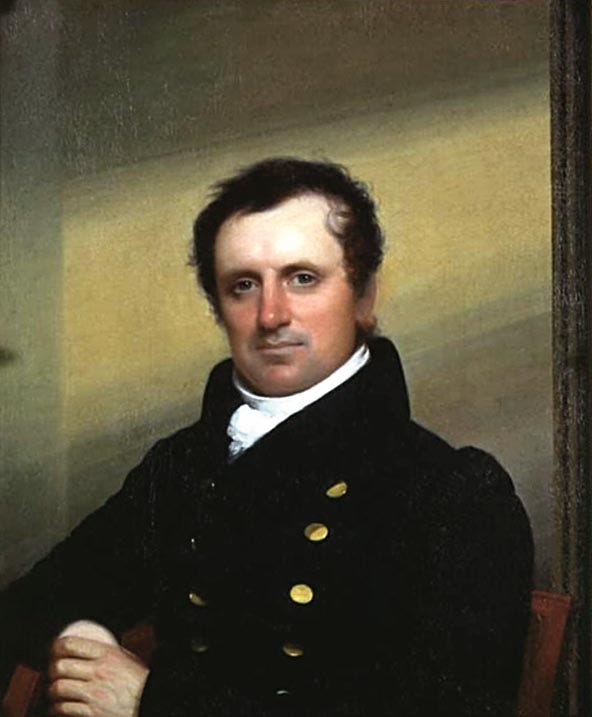
I don’t want to reveal too much about the twists and turns of the novel, because they are essential to Cooper’s excellent story-telling. But for the 250th anniversary of the Declaration of Independence, I cannot recommend enough that you read this early novel of the Revolution. The Spy serves as a strong reminder that the birth of our nation was not abstract, untethered from the world but anchored to principles. Rather, the actions of individuals and communities mattered in measurable ways, and those principles had concrete outcomes. As it turned out, the fight for freedom on the American shore mattered only insofar as it preserved the freedoms of the people who lived here.
Plus, it’s a ripping-good yarn.
You can get a good sense of what the Neutral Ground looked like through this article hosted by the National Park Service: https://www.nps.gov/articles/000/the-revolutionary-war-neutral-ground-of-westchester-county-new-york.htm
I love Cooper! I've never read the Spy, though. Thanks, Sean. Great stuff.