

What Use is Wizardry?
ASK Recommends: The Last Unicorn (1982)

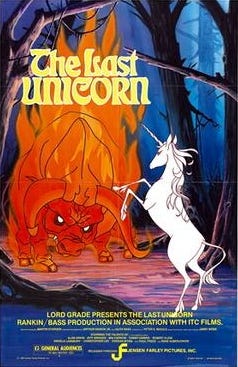
The Last Unicorn. Directed by Arthur Rankin Jr. and Jules Bass, featuring Alan Arkin, Jeff Bridges, Mia Farrow, Tammy Grimes, Robert Klein, Angela Lansbury, Christopher Lee, Keenan Wynn, Paul Frees, and René Auberjonois. Jensen Farley Pictures, 1982.
I could write pages and pages regarding how much I love Peter S. Beagle’s novel, The Last Unicorn (1968). But for this post, I want to actually encourage you to give the 1982 film adaptation a try. I will add at the front that my son hated this movie, but I will have to address his shortsighted views of adaptation another time.
I’ve spent the last few months encouraging folks on Substack to read Beagle’s excellent book, and I’ve had some success, I think.
But I have to give the animated film it’s due as a part of this effort. There is a lot to commend in this adaptation of The Last Unicorn, so I will only address a few of the main reasons here.
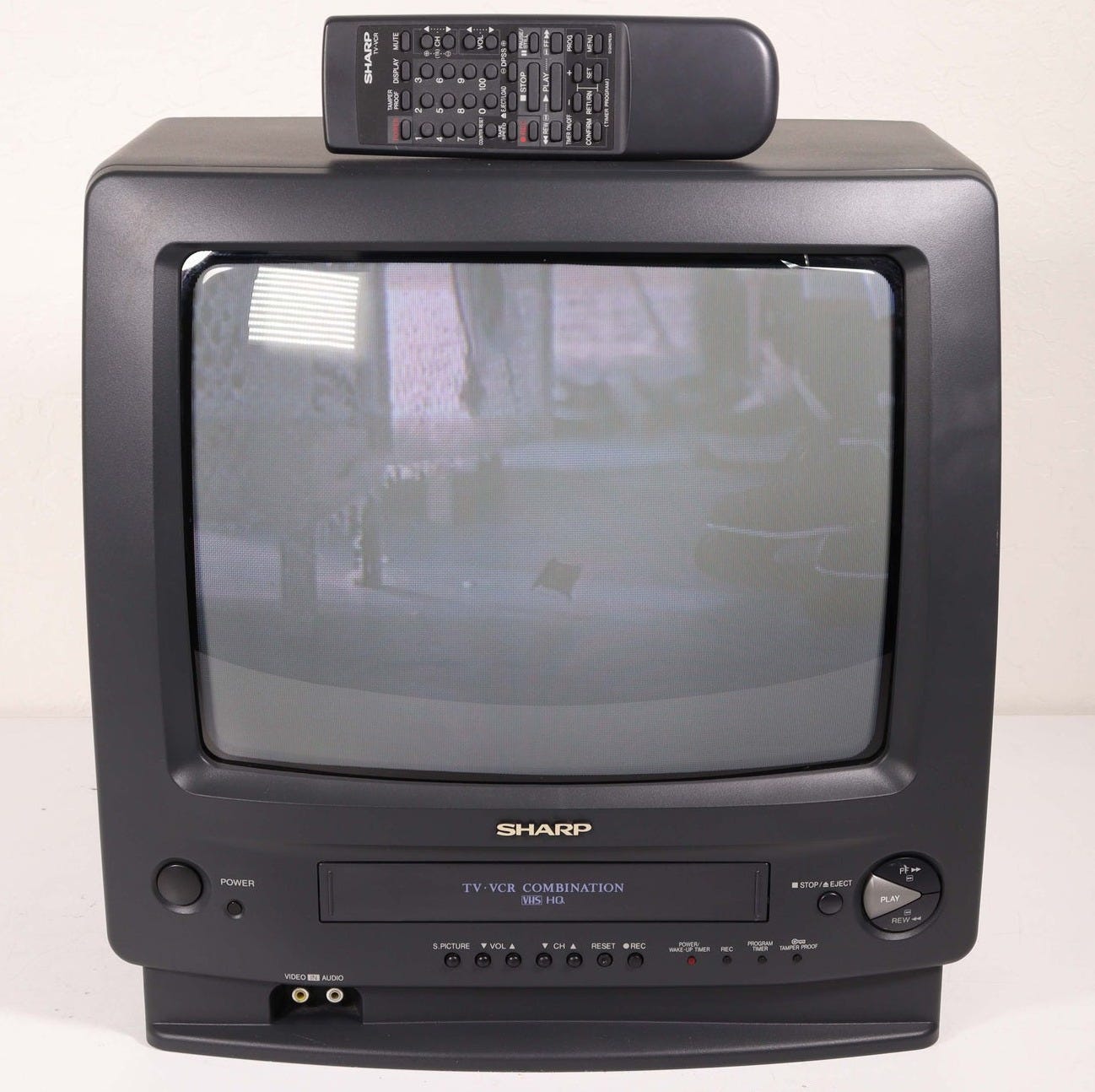
First, this is a movie that will help you love the book. I will admit that I have a biased, nostalgic love for this movie. This is more than a Reminiscence Bump, so bear with me briefly. As a child, I consumed a lot of media. I imagine I was a fairly standard consumer in the 80s and 90s, with a radio, a personal computer (running Windows 3.1), and a TV/VHS combo in my bedroom. I read quite a bit, compared to me friends, but I still took in most things through the television screen. I don’t know when I first watched The Last Unicorn, but it was early in my life. But, and this is the important part, this movie engendered a love in me that opened me to the novel. I started with the film and found that a story I loved could be even better. Many people watch novel adaptations and come away frustrated; by working in the opposite direction, I found this movie drew me into the book, causing me to note things explored in the written word that weren’t present in the film (though admittedly, the differences are surprisingly small). I firmly maintain that watching this film will make you a better reader of the book. And there aren’t many movies which can accomplish this.
Second, the quality of the film makes it stand out from its contemporaries. Granted, 1982 was a lean year for animated films, and most of them were merely television expansions (I’m looking at you Mighty Mouse in the Great Space Chase and Bugs Bunny’s 1001 Rabbit Tales). There was, of course, Don Bluth’s adaptation of Mrs. Frisby and the Rats of N.I.M.H., but it is such a heavy departure from the source material that it is essentially a different story. Of the 1982 releases, only Bluth’s film competes with The Last Unicorn in terms of quality animation, storytelling, and voice-casting. Add to those that it is more faithful to the book, and I think it is the clear winner.
Rankin and Bass Studios are at their peak here, with elements that are clearly their own but also bringing in aspects of Beagle’s imagination with give the film a distinct look compared with their other productions. And who could forget the voice casting? Jeff Bridges as Prince Lír is somehow chronologically jarring and also perfect for the young, impetuous man of virtue. Christopher Lee completely nails King Haggard, bringing his grizzled wickedness to life in a haunting performance. And while Beagle would disagree, I think Alan Arkin as Schmendrick is perfect. His voice acting captures the oddity about Schmendrick, destined to be a great wizard but cursed to be a buffoon. It is a perfect combination, exemplifying the unique moment that was fantasy films in the early 80s.
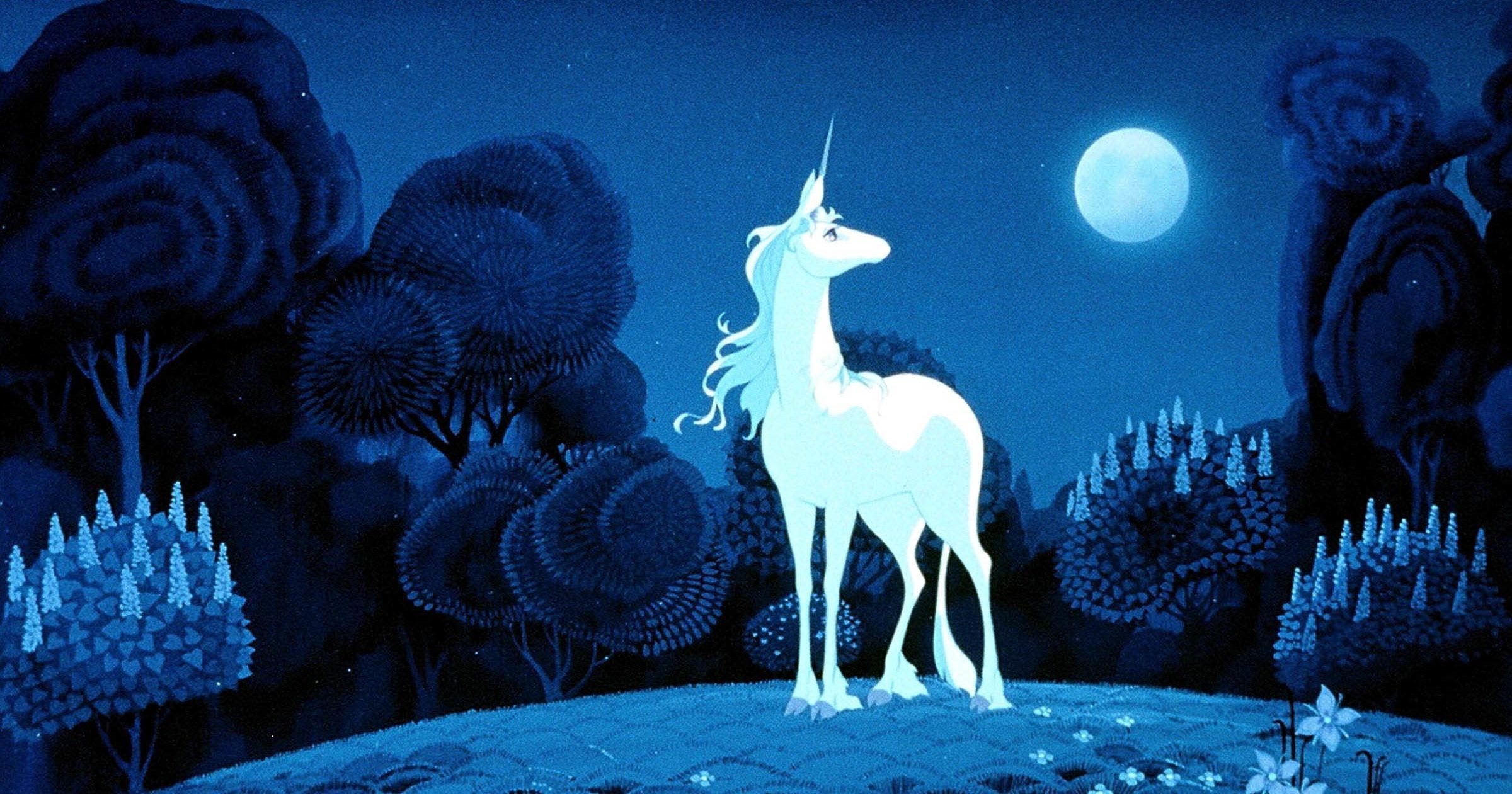
Third, the film bears all the hallmarks of Beagle’s wit and imagination, even amidst the changes from the source material. This is largely thanks to the fact that Beagle wrote the script himself. You could pull up the script and the novel side-by-side, and you would find an unusual amount of similarity. Normally, when films are made out of novels, the dialogue particularly suffers from on screen needs (i.e. actor chemistry, time constraints, idiot directors). Here, whole sections come from straight from the book, which is a good thing. On more than one occasion, I’ve walked into a classroom and started reading from Beagle’s novel aloud.1 The scene that I most often return to in such moments is in chapter XIII, where Schmendrick, Molly, and Lír engage in a sort so desperate argument about power. The scene from the book goes like this:
“Do something,” a hoarse voice said to Schmendrick, as Molly had said it long ago. Prince Lír stood behind him, his face bloody and his eyes mad. He looked like King Haggard. “Do something,” he said. “You have power. You changed her into a unicorn—do something now to save her. I will kill you if you don’t.” He showed the magician his hands.
“I cannot,” Schmendrick answered him quietly. “Not all the magic in the world can help her now. If she will not fight him, she must go into the sea with the others. Neither magic nor murder will help her.” [. . . ]
“Then what is magic for?” Prince Lír demanded wildly. “What use is wizardry if it cannot save a unicorn?” He gripped the magician’s shoulder hard, to keep from falling.
Schmendrick did not turn his head. With a touch of sad mockery in his voice, he said, “That’s what heroes are for.” (p. 273-274).
It is a powerful scene which is etched in my memory. But when I first read it in the book, I was a bit surprised. For in the movie, it is Molly Grue who asks the essential question: “What use is wizardry?” I’ve never heard Beagle explain this change, so I cannot speak from certainty, yet I’d like to venture a speculation. Regardless of his reasons, what it accomplishes is profound. Instead of a moment of almost mockery, in the film Schemdnrick’s response is to Lír despite Molly asking the question. As such, it becomes a request, a pleading, and far more hopeful. You can watch the scene below to get a sense of what I mean:
Not everyone loves this film (which is probably true of the book as well). Still, I think it is a worthwhile 93 minutes. It is something that will leave you thinking, and it will serve as invitation to something else. You don’t have to just take my word for it though.
This is normally either because a student asks my thoughts on the novel, or because the mood strikes me. Such impromptu moments remain one of the benefits of a brick-and-mortar school, in my experience.
This movie and book do not get the love they deserve - bravo!